For much of the 20th century, Duval County politics was dominated by the Parr family, whose influence eventually stretched across the region, including Jim Wells County. The political organization built by Archer Parr and later expanded by his son, George Berham Parr, became known as the “Parr Machine,” a system that blended political loyalty, economic influence and, according to historians and critics: intimidation and corruption.
Archer Parr understood the importance of Hispanic voters in maintaining his family’s political power. His political organization relied on a “Patron” system, in which political support could be cultivated through favors, employment opportunities, and government contracts, while his opposition often faced violence and intimidation at the ballot box. First-hand accounts from the era describe armed men at polling places, interference involving ballots cast by illiterate voters, and allegations of manipulated election results.
Following the death of Archer Parr, his son George Berham Parr inherited and greatly expanded the family’s political system of control. Known as “El Patrón,” or “The Boss,” in English, George Parr emerged as one of the most powerful political figures in South Texas. His vast wealth came from a broad collection of business interests, including banking, ranching, retail and oil, while his political organization maintained considerable influence over public institutions, eventually earning him the nickname “Duke of Duval.”
Parr’s career was repeatedly overshadowed by criminal allegations and convictions involving corruption and fraud. Yet his political connections provided him with powerful allies, including future U.S. President Lyndon B. Johnson, then a rising Texas congressman. In 1946, President Harry Truman granted Parr a pardon, allowing him to return to public life. Parr later held positions including county judge and sheriff, even as allegations involving bribery, racketeering, tax violations and other crimes continued to follow him.

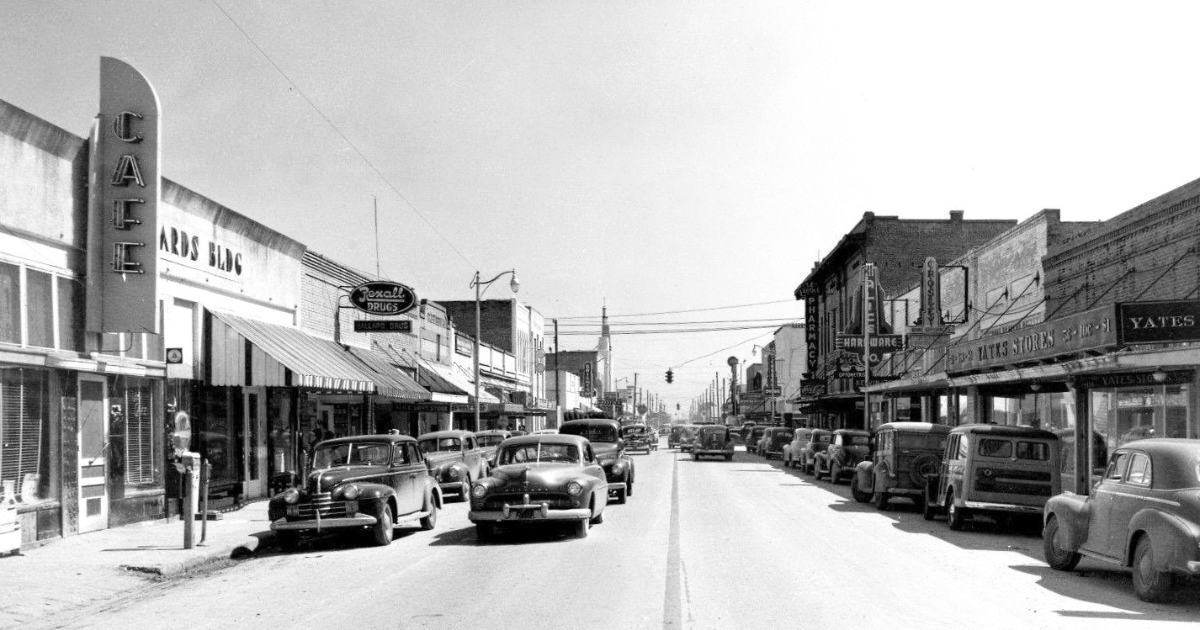
Photo via Traces of Texas.
In May 1952, after decades of Parr political domination, Ricardo Beasley, an artist, and Manuel Sanchez, a businessman and accountant, helped establish the Freedom Party in Alice. The group’s central goal was to challenge a political system that its members believed prevented residents from voting freely. Organizers hoped to build a coalition opposed to Parr’s influence and field candidates in future Democratic primaries.

The Freedom Party’s effort quickly encountered barriers and controversy, as the group directly threatened the survival of Parr’s political dynasty. Members of the Freedom Party alleged that violent threats were being made against the movement, accusations that Parr denied. The party’s internal leadership also became the subject of dispute, and its future was thrown into uncertainty after Sanchez resigned following the group’s early efforts.
While the Freedom Party did not immediately overthrow Parr, it did remain a persistent source of opposition to his political machine. The party’s organizing later expanded beyond Jim Wells County into Parr’s home territory of Duval County. During the 1950s, Freedom Party candidates and their allies won several local offices and increasingly challenged Parr-backed candidates. In 1958, the party received 31 percent of the vote in a three-way Duval County contest.
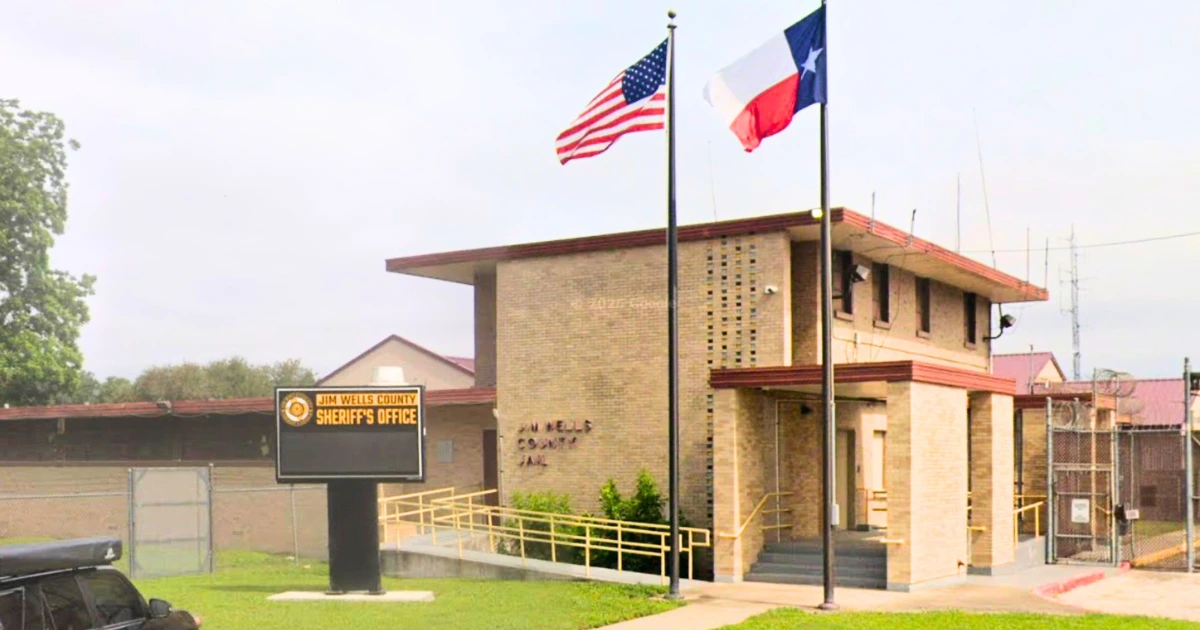
Opposition to the Parr Machine could be dangerous, sometimes fatal, and several violent incidents stemming from this time period have now become part of Alice history. On July 29, 1949, Alice journalist W. H. Mason was shot and killed by a Jim Wells County sheriff’s deputy who was associated with Parr’s political organization. The Texas Rangers investigated the killing, and the deputy was eventually sentenced to 99 years in prison.
Three years later, the son of Alice attorney Jacob Floyd was shot and killed. Testimony presented during the subsequent trial indicated that the intended target may have been Floyd’s father, who was alleged to have been involved in the Freedom Party’s leadership — an allegation he denied. Two men were later convicted in connection with the killing and reportedly tied to Parr’s political organization.
For years, however, criminal investigations and political challenges failed to immediately dismantle Parr’s influence. His position didn’t begin to weaken until after Johnson left the presidency, depriving Parr of one of his most significant political connections.
By the 1970s, years of investigations, criminal charges and legal appeals had finally caught up with the longtime political boss. In 1974, Parr faced a 10-year prison sentence for tax evasion. Before he could serve the sentence, and after many appeals, he took his own life at his ranch on April 1, 1975, never facing justice for the life of crime he lived.

Parr’s death marked the end of one of the most notorious political machines in Texas history. The Freedom Party had never managed to completely replace Parr’s organization, but its emergence in the 1950s represented a significant turning point. For more than two decades, its supporters and other opponents continued challenging Parr at the ballot box and in the courts, helping demonstrate that the political power he had built was not undefeatable.
For the City of Alice, the Freedom Party’s story is an important part of the community’s connection to one of the defining political battles of South Texas history. While many other South Texans kept their heads down, Alice residents fought back, sometimes giving their lives, in defense of democracy.