Photo: Google Maps Streetview
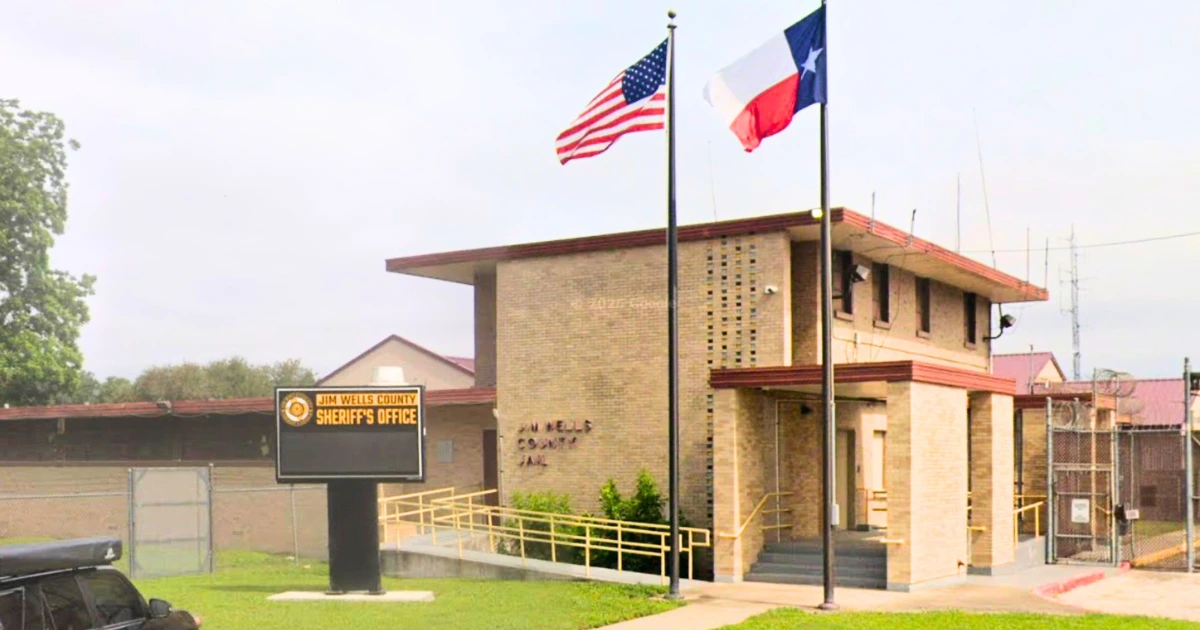
Earlier this year, Jim Wells County officials revealed that the county has been spending nearly $87,000 a month to house and transport inmates between Maverick County and Jim Wells County. A cost that is expected to rise as the county’s inmate population and policing continues to grow.
At a March Commissioners Court meeting, County Judge Pete Treviño Jr. announced that the county government owed a whopping $962,150 to Maverick County, which is located nearly three hours away, for costs associated with housing and transporting Jim Wells County inmates.
While the immediate issue began with alleged accounting errors that prevented payments from reaching Maverick County, the nearly $1 million in unpaid bills has raised a broader question among Jim Wells County residents: whether the county is spending too much to house inmates elsewhere, and whether its jail system is devoting too many resources to low-level, nonviolent offenses.
The data is clear, Jim Wells County law enforcement is spending a massive amount of time and resources on non-violent offenders, taking up critical time and housing space that could be used for more serious offenders. According to a Police Scorecard analysis of Jim Wells County Sheriff’s Office data from 2013–2023, the average jail population was about 70 people, or roughly 4 per 1,000 residents. In that period, 3,431 arrests were made, 69% were for low-level, nonviolent offenses, 16% were for drug possession, and only 6% were for violent crime. Jim Wells County also leads the state in the percentage of inmates who sit in jail without ever being convicted of a crime with a staggering 83%.
In plain terms, this means that the Jim Wells County Sheriff’s department is devoting a lot of time and money on arresting people for low-level nonviolent offenses, while spending five figures to send overflow inmates to Maverick County.
Jim Wells County officials have tried to tackle low-level offenses before, for example the county’s Drug and Alcohol Court Diversion Program provides treatment and supervision for eligible defendants that may ultimately result in the dismissal of charges after successful completion. The county also operates a pretrial bond-release program specifically intended to reduce jail overcrowding by releasing eligible defendants under supervision rather than keeping them incarcerated while their cases are pending.
Unfortunately, these programs still largely operate after someone has entered the criminal-justice system. If Jim Wells County wants to meaningfully reduce the number of people entering its jails in the first place, it should look at how police respond to low-level offenses.
Other Texas jurisdictions have already provided models worth following. San Marcos, for example, participates in a cite-and-release program that allows officers to issue citations instead of making an arrest and booking someone into jail for certain eligible low-level offenses, including some drug-possession offenses. Instead of arresting someone for a low-level offense, San Marcos police officers now issue criminal citations instead of making arrests, saving the city time and money in the process.
Jim Wells County Sheriff Joseph “Guy” Baker’s response to the unpaid bills and mounting jail costs did little to demonstrate that he truly understands the depth of the problem. While his proposed solution of more money and more beds may solve the jail’s capacity problem in the short term, the truth is, Jim Wells County could be facing a similar problem in another 15-20 years.
The data and the reality on the ground raise a difficult question for Jim Wells County residents about whether the county’s current approach to low-level, nonviolent offenses is worth the extraordinary cost of incarceration. Expanding jail capacity may provide more beds, but it would not address the underlying question of whether incarceration is always the most effective or fiscally responsible response to nonviolent offenses. If county officials want to truly reduce the jail’s overpopulation, it will require an all-of-the-above approach to solve the problem.